Will AI Replace Actors? — From “Performance Substitution” to a Paradigm Shift in Acting
Will AI Replace Actors?
— From “Performance Substitution” to a Paradigm Shift in Acting
As artificial intelligence rapidly penetrates the core of film and television production—from script generation to visual synthesis and character modeling—it is no longer merely a tool. It is becoming an integral part of creation itself.
This raises a pressing question:
If AI can perform, are human actors still necessary?
The answer is neither a simple “yes” nor “no.”
What is truly happening is not the disappearance of actors, but a deeper transformation:
Acting is shifting from a human behavior to a designable system.
I. AI Is Not Replacing Actors — It Is Deconstructing Acting
Traditionally, actors embody three core capacities:
-
Emotional expression
-
Physical control
-
Character interpretation
AI does not replace these wholesale—it decomposes and reconstructs them.
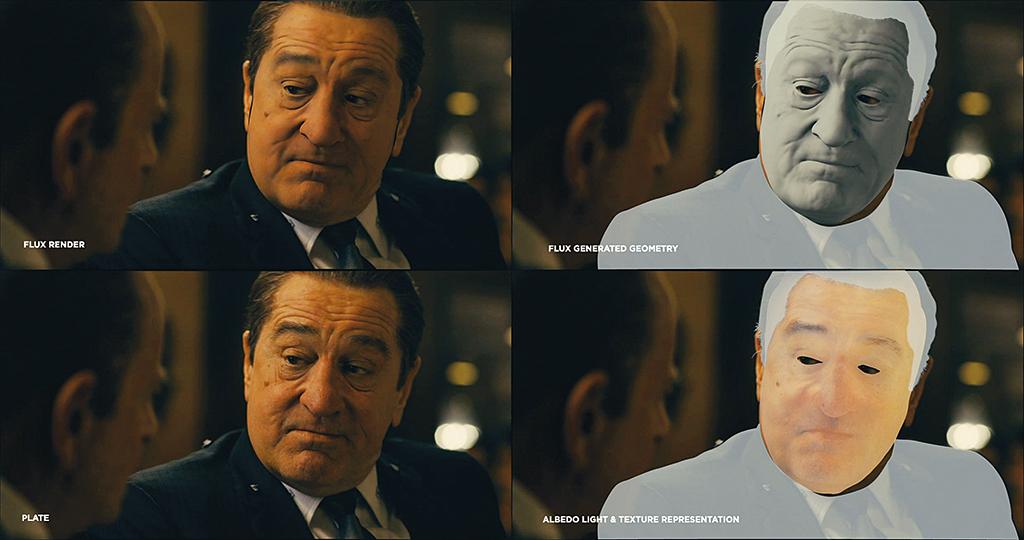
Case 1: The Irishman — The Elimination of Age
Through advanced de-aging technology, actors like Robert De Niro and Al Pacino portrayed characters across decades within a single film.
What changed is not the actor, but the constraint:
-
Biological age is no longer a limit
-
The actor becomes a temporally flexible medium
Implication:
The body is no longer fixed in time—it becomes an editable parameter.
Case 2: Rogue One: A Star Wars Story — Death Is No Longer Final
The film digitally recreated Peter Cushing as Grand Moff Tarkin.
This marked a controversial yet pivotal shift:
-
Performance can exist without the performer’s physical presence
-
The actor’s likeness becomes separable from their life
Implication:
Actors evolve from individuals into persistent digital assets.
Case 3: Hatsune Miku — Emotional Bonds Without Human Origin
A purely virtual entity, Hatsune Miku has:
-
Sold out global concerts
-
Built massive fan communities
-
Established emotional resonance with audiences
Implication:
Audience attachment does not strictly require a human performer.
Case 4: Avengers: Endgame — Separation of Performance and Appearance
Josh Brolin performed Thanos via motion capture, while the final character is entirely digital.
What this reveals:
-
Acting becomes data input
-
The final “performance” is computationally rendered
Implication:
Actors are no longer the final visible form—they are performance data sources.
II. AI Advantages: A Structural Reconfiguration of Film Production
AI’s impact is not incremental—it is systemic.
1. From Filming to Generation
Traditional pipeline:
Actor → Camera → Post-production
AI pipeline:
Data → Model → Generation
Filming itself may become optional.
2. From Actor-Centered to IP-Centered Systems
Future structures may include:
-
Characters that persist independently of any human actor
-
Long-term narrative continuity without recasting
Implication:
The logic of animation and gaming enters live-action cinema.
3. From Performance Direction to Parameter Control
Directors may shift from:
-
Guiding actors
to -
Tuning systems and models
III. The Irreplaceable Dimension: The “Weight of Presence”
Despite technological advances, one dimension remains difficult to replicate:
The existential weight of a human presence.
Case 5: Joker — Psychological Depth Beyond Simulation
Joaquin Phoenix’s performance is widely regarded as transformative.
What audiences perceive is not just technique, but:
-
Physical sacrifice
-
Emotional extremity
-
Psychological immersion
Key distinction:
AI can simulate expression, but not lived experience.
Case 6: Marriage Story — Relational Authenticity
The confrontation between Adam Driver and Scarlett Johansson is powerful precisely because it emerges from:
-
Real-time interaction
-
Unpredictable emotional escalation
Implication:
True acting is not only expression—it is co-experienced reality.
IV. The Future Structure of Acting
The industry is unlikely to disappear—but it will stratify.
1. Replaceable Layer (Standardized Performance)
-
Extras
-
Generic roles
-
Mass-produced short-form content
→ Highly susceptible to AI replacement
2. Hybrid Layer (Human–AI Collaboration)
-
Motion capture performers
-
Facial data actors
-
AI character trainers
→ Actors become interfaces between human and machine
3. Core Layer (Irreplaceable Actors)
-
Strong personal style
-
Deep emotional range
-
Cultural and social influence
→ Increasingly rare and valuable
V. A Deeper Question: What Do Audiences Actually Watch?
If AI can perform perfectly, why watch humans?
Because:
Audiences are not only watching a character—they are witnessing a human becoming another human.
This is not merely output—it is transformation.
VI. Conclusion: AI Will Not End Acting — It Will End the Era of Ordinary Actors
AI does not eliminate actors.
It eliminates mediocrity in acting as a profession.
The future will polarize:
-
Standardized performance → absorbed by AI
-
Exceptional performance → amplified in value
Ultimately, the industry may evolve into a new division:
AI produces images.
Humans produce meaning.