AI and Actors: Disappearance or Reinvention?
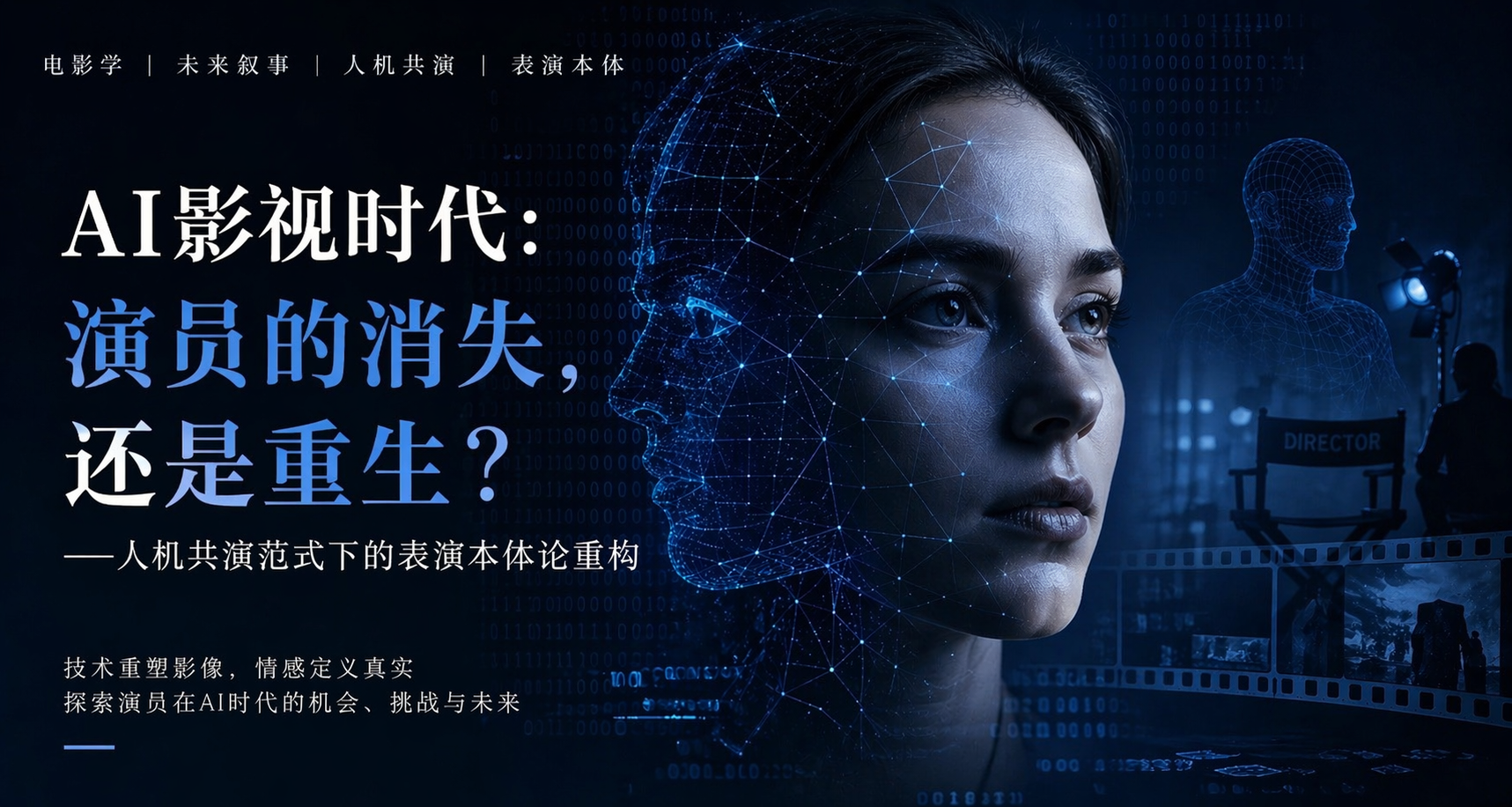
AI and Actors: Disappearance or Reinvention?
Reconstructing Performance in the Age of Human–AI Co-Creation
Introduction
For over a century, actors have stood at the center of cinematic expression. From the physical intensity of silent film to the vocal complexity of sound cinema, and later to motion capture and digital characters, the form of performance has evolved—but its essence has remained intact:
The actor is the carrier of emotion and meaning.
Today, generative AI challenges this assumption at a fundamental level.
If images can be generated, voices synthesized, and performances simulated, then a deeper question emerges:
Does performance still belong to humans?
This is not merely a question of technological substitution. It is a question about the ontology of acting itself.
From Captured Performance to Generated Performance
Traditional cinema is built on recording performance. A camera captures a human body expressing emotion within a structured narrative.
AI introduces a shift:
From capturing performance → to generating performance
In this new paradigm:
- Characters no longer require physical presence
- Emotions can be algorithmically modeled
- Performance becomes partially detached from human embodiment
Cinema, for the first time, is no longer dependent on actors in a literal sense.
Three Models of Human–AI Collaboration
The first model is enhancement. AI acts as a tool that amplifies human performance—de-aging, facial refinement, and action augmentation. The actor remains the emotional origin; AI extends the expressive surface.
The second model introduces virtual actors. Here, AI generates the character itself, while human performers provide motion, voice, or emotional references. The actor shifts from visible presence to invisible architect—what we may call a character architect.
The third model is generative narrative. In this scenario, most of the visual world is AI-generated, and human actors appear only at key moments. Their role transforms into that of an “emotional anchor,” no longer continuous but strategically essential.
The Revaluation of Acting
Paradoxically, AI may not diminish acting—it may intensify its value.
When everything can be simulated, authenticity becomes scarce. What cannot be easily replicated is not the surface of performance, but lived experience.
Actors like Leonardo DiCaprio or Scarlett Johansson are not valuable because of their appearance, but because of the depth, ambiguity, and unpredictability embedded in their performances.
AI can imitate structure. It struggles to reproduce life.
Conclusion
AI will not eliminate actors. But it will dissolve the traditional definition of what an actor is.
In the future, an actor may no longer be:
a person performing in front of a camera
but rather:
a system-level creator shaping emotion, identity, and narrative.